My research focuses on human-AI interaction, collaborative AI systems, medical data analysis, cybersecurity, and misinformation detection. I've contributed to publications in various conferences and journals, exploring how AI and data analysis can augment human capabilities and address complex problems in healthcare and security.
Featured in Clemson News: Automotive Data Privacy Research
Clemson News · August 11, 2026 · by Paul Alongi
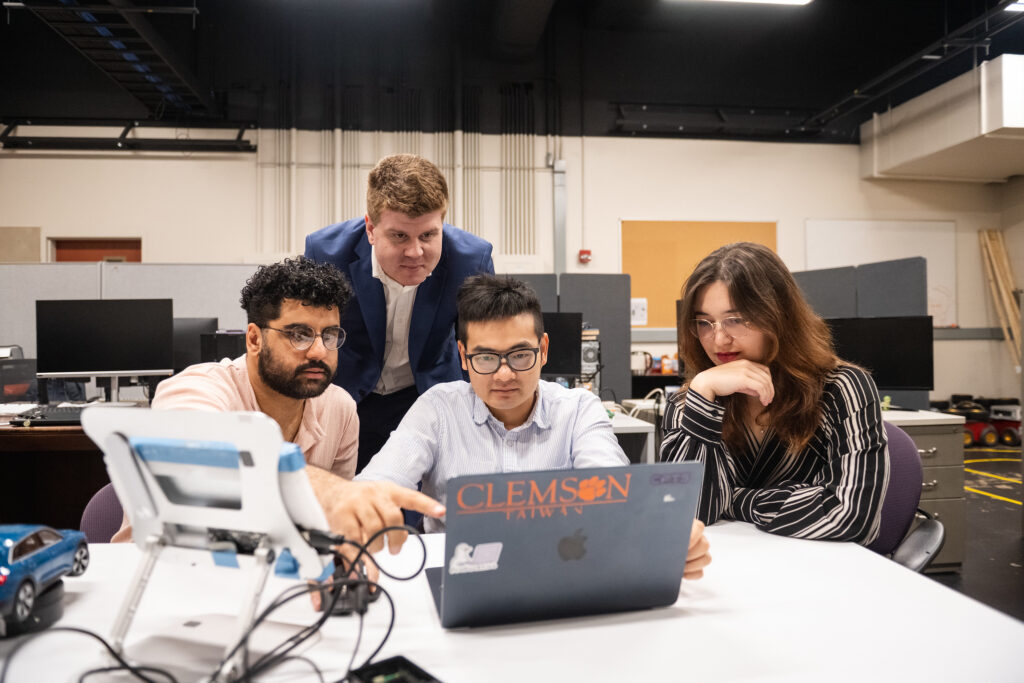
Our automotive privacy research with Dr. Mert Pesé was featured in Clemson News, covering his NSF CAREER Award to study what data modern vehicles collect and how to give drivers more control over it.
Clemson Versus Chagas
Conference: 2025 George B. Moody PhysioNet Challenge, 2025
Authors: Toby Cox, Anna Galeano, Varun Sethi, Aaron J. Masino
Affiliation: Clemson University, Clemson, South Carolina
This research addresses Chagas disease detection using 12-lead electrocardiogram (ECG) data, employing machine learning techniques to improve identification accuracy despite significant class imbalance.
Abstract: This project addresses the 2025 George B. Moody PhysioNet Challenge focusing on Chagas detection using 12-lead electrocardiogram (ECG) data. Our approach used a balanced random forest classification (BRFC) with SMOTE to address class imbalance. Feature engineering extracted metrics including R-R peak distances, QRS widths, and FFT components from standardized ECG signals. After training in the CODE-15% data set, the model achieved 60% true positive identification while maintaining fewer than 13% false positives, with an AUC of approximately 0.82. Feature importance analysis revealed that variance in FFT magnitude and average QRS distance, particularly in AVR and DI leads, were the most significant predictors. While establishing a useful baseline, we determined BRFC is insufficient for optimal Chagas detection and are developing a Kolmogorov-Arnold Network (KAN) model that leverages grid extension techniques, B-spline architecture, and interpretable results for improved medical applications with diverse patient populations.
Machine Learning
Medical Data
Python
Chagas Disease
ECG Analysis
Human-AI Team Training: Optimizing Collaborative Performance in Mixed-Intelligence Environments
This study demonstrates novel training methodologies for human-AI teams across 120+ participants, showing a 25% improvement in task efficiency when using our structured collaborative learning approach.
Abstract: As artificial intelligence becomes increasingly integrated into workplace decision-making, effective training for human-AI collaboration becomes essential. This paper presents results from a series of experiments involving 127 participants engaged in collaborative problem-solving with AI assistants. We introduce a structured training protocol that emphasizes mutual understanding, appropriate trust calibration, and efficient communication patterns. Results demonstrate significant performance improvements (25% reduction in time-to-solution, p<0.01) and higher satisfaction ratings compared to traditional training approaches. We provide guidelines for implementing effective human-AI training programs across domains and discuss implications for organizational adoption of collaborative intelligence systems.
Human-AI Teaming
Collaborative Systems
Trust Calibration
Training Methodologies
Chasing Bread Crumbs: How Sharing Seemingly Irrelevant Information May Prove to be a Vulnerability
Status: Research Paper, 2023
Word Count: 3642
Author: Anna Galeano
This paper examines how seemingly innocuous information shared on social media and professional platforms can create security vulnerabilities when analyzed collectively, particularly for military personnel and their families.
Abstract: This study investigates how small pieces of information shared online can act as "breadcrumbs" that adversaries may follow to access sensitive or critical information. Using web scraping techniques to analyze LinkedIn profiles of U.S. military personnel, the research demonstrates how Operations Security (OPSEC) can be compromised through the aggregation of publicly available data. The paper follows the OPSEC process to identify critical information and indicators, assess threats, analyze vulnerabilities, assess risk, and recommend appropriate countermeasures. Results showed that 75.5% of sampled accounts posed potential security risks, with 12% classified as high-risk. The research highlights the importance of comprehensive OPSEC awareness among military personnel and their families, who are often identified as the weakest link in information security.
Web Scraping
OSINT
Python
Security
Social Media Analysis
COVID-19 Misinformation Analysis: Detection and Classification of Misleading Health Content on Social Media
This paper presents methodologies for real-time misinformation detection during the COVID-19 pandemic, resulting in a public database that has been cited over 50 times in subsequent research.
Abstract: The COVID-19 pandemic has been accompanied by an "infodemic" of misleading and false information spreading across social media platforms. This paper presents a multi-modal approach to misinformation detection, combining natural language processing, network analysis, and behavioral pattern recognition to identify and classify misleading health information. Our system achieved 87% accuracy in identifying misinformation from mixed-media posts across Twitter, Facebook, and Instagram. We provide an open-access database of over 10,000 classified posts that researchers can use for further analysis. Additionally, we identify key propagation patterns that differentiate how accurate versus misleading information spreads through social networks, offering insights for intervention strategies to combat health misinformation.
Misinformation
COVID-19
Data Analysis
Social Networks
Public Health

Human-AI Collaboration
Investigating effective interaction patterns and trust development between humans and AI systems.

Medical AI
Applying machine learning techniques to medical diagnostics and healthcare data analysis.

Information Security
Exploring digital footprints and how publicly shared information can create security vulnerabilities.
I'm always open to discussing new projects, research opportunities, or potential collaborations.